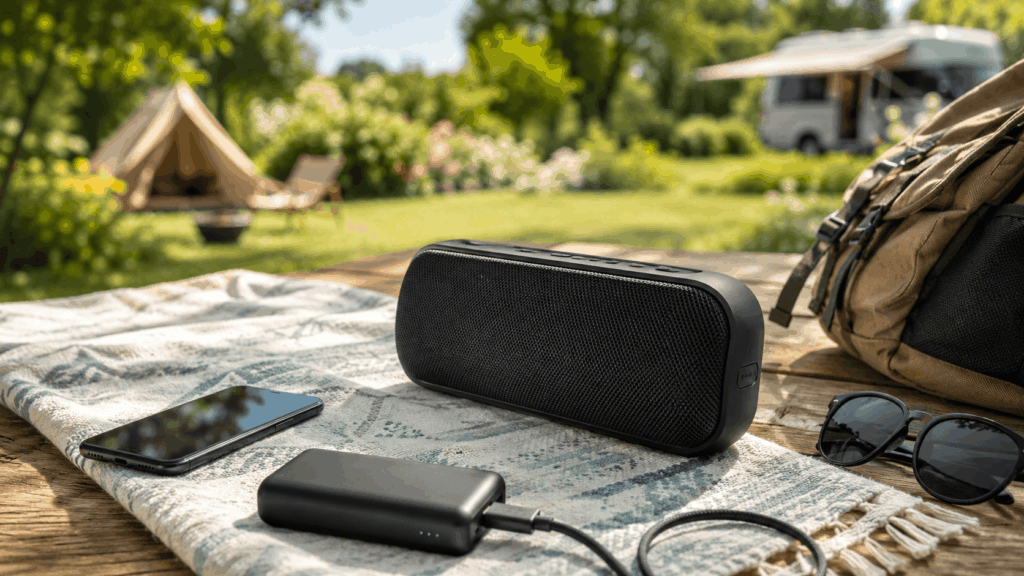
For years, Bluetooth has been the foundation of connectivity in the devices we use daily: from headphones and speakers, to mice, keyboards, smartwatches, trackers, and other computer accessories. With subsequent versions of the standard, not only does the operation of audio equipment change, but also the convenience of using wireless devices at home, in the office, and while traveling.
Bluetooth 6.1 shows that the development of this technology is increasingly focusing on stable communication, energy saving, and better user privacy protection.
Table of contents
Bluetooth 6.1 – the next step in improving technology
While changes in Bluetooth technology are not spectacular, Bluetooth 6.1 is another step in the development of short-range wireless communication technology. The new version is primarily intended to improve the operation of devices in the background – where stable connection, longer battery life, and greater privacy are important to the user.
One of the important changes is Randomized RPA Updates, which is a mechanism for randomly refreshing Bluetooth device addresses. In practice, it’s about privacy protection – making it harder to track devices based on fixed identifiers, while also making Bluetooth communication more energy-efficient. This is particularly important for small accessories such as TWS headphones, trackers, mice, and keyboards, which are expected to operate for a long time, stably, and without frequent recharging.
What does Bluetooth 6.1 mean for wireless headphones?
In the case of such Bluetooth devices as Bluetooth headphones or TWS headphones, a new Bluetooth version does not automatically mean better sound quality. Bluetooth 6.1 is primarily a technical change that can affect connection stability, better privacy protection, and greater energy efficiency.
Bluetooth 6.1 technology develops elements that operate in the background but are very important in everyday use: efficient communication with a smartphone and longer battery life for wireless headphones.

Bluetooth on an airplane
Can TWS headphones be used during a flight?
Computer accessories with Bluetooth 6.1 – compatibility and energy efficiency in daily work
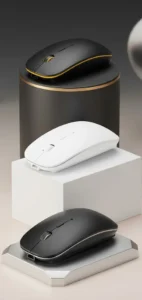
The development of Bluetooth technology is also very important outside the audio segment, as wireless mice, keyboards, and other computer accessories are widely used today when working with laptops, tablets, and smartphones. In their case, wireless Bluetooth communication no longer only serves to reduce the number of cables on the desk, but also for convenient switching between compatible devices, fast pairing, and stable operation in a mobile environment.
In computer accessories, the most important are short, frequent signals transmitted between a device and a computer: mouse movement, key press, waking up the device after a period of inactivity. Therefore, Bluetooth 6.1 and subsequent Bluetooth connectivity standards are important not only for the connection itself, but also for reducing energy consumption and for more efficient background operation of devices working many hours a day. This is a practical technological improvement that can be significant wherever several Bluetooth devices operate simultaneously at one workstation.
How can Bluetooth 6.1 improve future phone accessories?
The new version of Bluetooth, introduced in 2025, primarily improves areas that affect the daily operation of wireless devices: communication stability, privacy protection, and energy saving. The specification of the Bluetooth 6.1 standard, described by Bluetooth SIG in the Bluetooth Core Specification document, shows that the development of this technology is not only about adding spectacular features, but also about improving hardware performance in the background.
For users and stores, this means that when choosing products such as Bluetooth headphones, TWS headphones, or wireless computer accessories, it’s worth paying attention not only to the price and appearance, but also to the connectivity version, compatibility, and Bluetooth energy efficiency.
The first accessories described as compliant with Bluetooth 6.1 are already appearing on the market, but in the case of wireless headphones, it is still difficult to speak of widespread availability of recognizable models using this standard. Therefore, Bluetooth 6.1 should primarily be treated today as a development direction for future generations of TWS headphones, computer accessories, and other Bluetooth devices, rather than a common feature in current offerings.