The mobile accessories market in 2025 is focusing more than ever on quality and ergonomics. Customers are increasingly choosing solutions that support comfort and ensure optimal working conditions – price is no longer the primary factor. For retailers, this is a signal that effective sales today are not only about a wide range of products, but above all, about demonstrating the value of a product.
In this article, we present 5 trends that will help you increase your margins and communicate mobile devices more effectively – from ergonomics and the premium segment to practical sales tips.
The trend toward ergonomics and hybrid work
As recent reports show, hybrid working is no longer a temporary trend – it has become a natural direction for modern companies to take. This is confirmed by CIPD research, which indicates that as many as 74% of organizations now combine office work with the option of remote working*. For many people, this means the need to properly organize their home office – so that it promotes concentration, ergonomics, and comfort.
It is essential to have all the necessary equipment and accessories at hand – this allows you to work in harmony and with full concentration. Home offices can look very different: some people work at a small desk in their living room, while others have a separate room at their disposal. Regardless of size, modern technologies offer more possibilities to create a comfortable and well-equipped workstation, even in a limited space.
Premium vs. cheap – why it sells
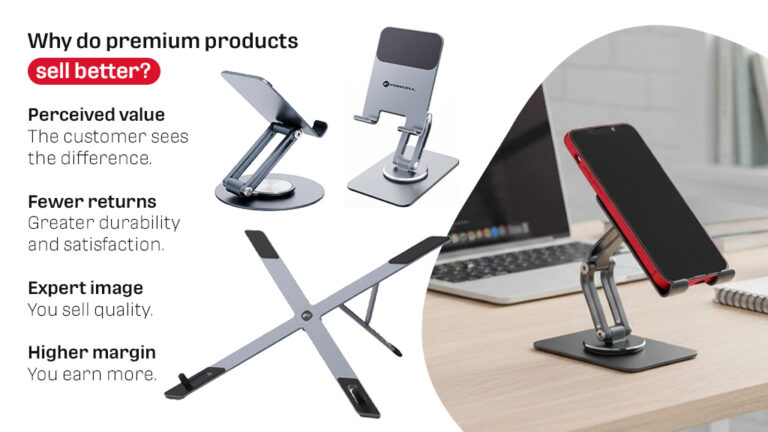
In the mobile device industry, it is becoming more apparent that customers are no longer guided solely by price. Growing expectations regarding quality, durability, and aesthetics mean that premium products are becoming the first choice—especially among users who treat accessories as a lifestyle element rather than a disposable item.
For retailers, this change translates directly into higher margins and a more stable business. Better-quality products mean fewer complaints and returns, greater user satisfaction, and increased brand loyalty. Importantly, in 2025, “premium” is no longer just about appearance – it is primarily about solid materials and functionality that make everyday work easier. Customers are increasingly willing to pay more for accessories that work well every day and look good in any environment, whether at the office or at home.
Case study: Forcell F-Grip increases margins and market advantage
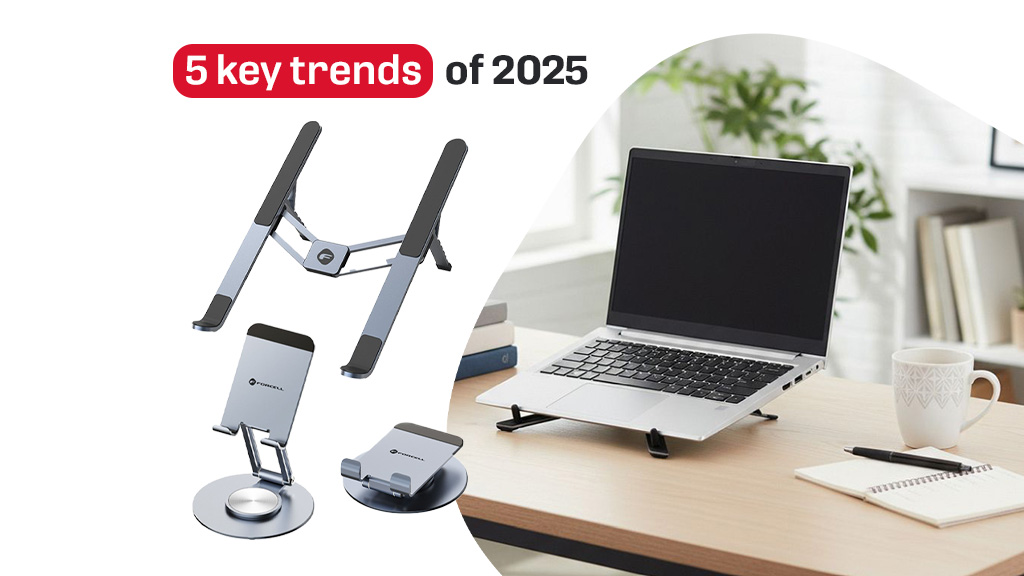
The Forcell F-Grip Stands line of holders perfectly meets the needs of modern users and the realities of hybrid work. These accessories help you better organize your workspace and enhance your comfort. A well-designed holder for a phone, tablet, or laptop supports correct posture, reduces neck and eye strain, and has a tangible impact on the user’s health and well-being.
Although ergonomics and home offices are strong trends, desk holders are timeless – they support mental and physical health by preventing complaints resulting from prolonged sitting.
All this makes Forcell F-Grip Stands highly profitable products with great sales potential:
- Premium segment – aluminum and solid construction allow for higher retail prices and better margins.
- A growing trend in ergonomics – the stands are an essential accessory for people working remotely or in a hybrid environment; this category is not affected by seasonal fluctuations.
- Ease of display – simple operation and durability reduce complaints, and the product presentation in the store is intuitive.
- A broad audience – from office workers to students and content creators – appreciates convenience and order.
- Cross-selling – F-Grip perfectly complements the sale of cases, chargers, and desk accessories, increasing the value of the shopping cart.
Positive reactions during the IFA Berlin trade fair confirmed the potential of this line – customers appreciated the quality of the materials and the precision of craftsmanship, and the opportunity to “touch” the product proved crucial in building trust and purchasing decisions.
How to effectively present premium accessories in-store and online
Even the best product needs proper exposure to convince the customer to buy. In the case of premium accessories, hands-on experience is key – the opportunity to see, touch, and compare them with others. It is worth providing a demonstration stand or a “live” display where customers can test the holder, charger, or headphones. Open packaging and display stands increase trust and shorten the decision-making process.
Especially for B2B partners, we have placed a wide range of ready-made sales support resources on our wholesale website, in the Materials to download section:
- comparative graphics (including protective films and glass, TWS headphones, holders),
- catalogs and product leaflets for our own brands and exclusive brands,
- Forcell advertising materials – photos, videos, and ready-made creations for use on social media or on the store’s website.
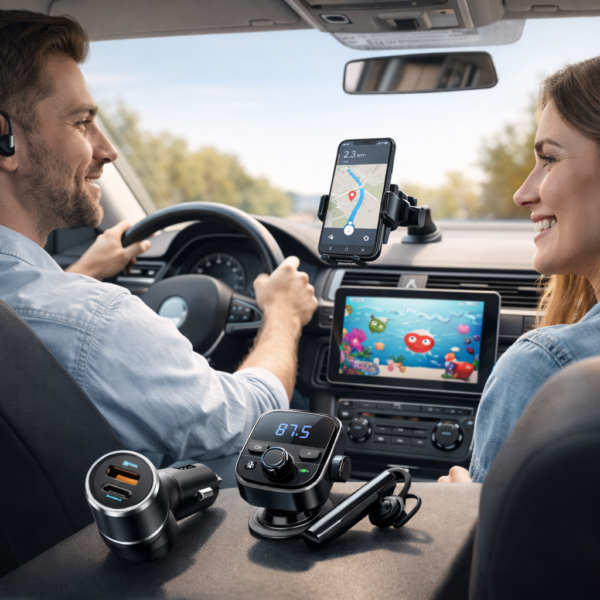
A good practice in stationary stores includes arranging products by category, not just by brand. This makes it easier for customers to find a set of accessories tailored to their needs – e.g., a car kit (including a phone holder, FM transmitter, and camera) or phone accessories (such as cases, wall chargers, stands, selfie sticks, and other smartphone photography accessories). This arrangement encourages complementary purchases and increases the value of the shopping cart.
Arguments that sell – how to reach the end customer
When communicating with the end customer, it is crucial to show the value of the product, not just its functions. It is worth using product storytelling – talking about accessories not as extras, but as elements of everyday comfort and work style. Demonstrating how the product truly makes life easier for the user is more effective than listing technical parameters.
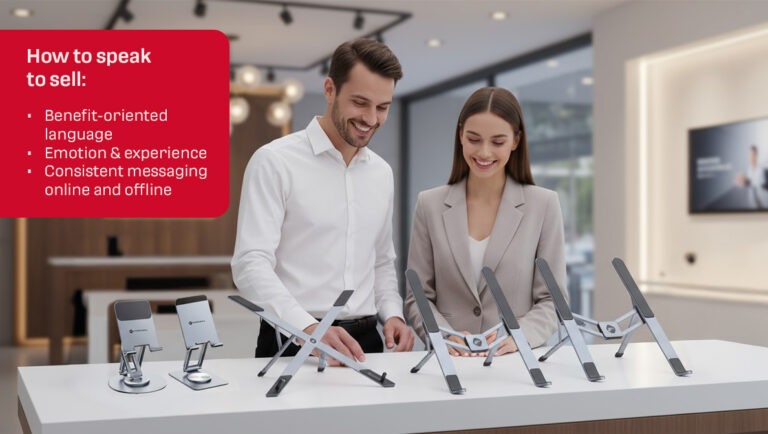
In practice, this means using benefit-driven language that relates to everyday experiences and situations. Instead of saying “metal phone holder,” it is better to say “a stable place for your phone during video calls.” Instead of “adjustable angle,” say “a comfortable screen position that relieves neck and eye strain.” This approach not only brings the product closer to the user but also fosters trust in the brand.
Sellers can also use contrast – showing the difference between a cheap car or desk holder and a premium product in everyday use. A simple example will suffice: a wobbly holder versus a solid aluminum construction that holds the device securely throughout the day. This type of comparison immediately triggers emotions and convinces the customer of better quality.
It is worth remembering that consistent communication, language, and visual aesthetics, both online and offline, strengthen brand recognition and the image of an expert who is worth trusting. This, in turn, translates into greater customer loyalty and repeat purchases.
To help B2B partners conduct such sales conversations, we have prepared a free sales guide for the Forcell F-Grip Stands line – an example of accessories that perfectly combine ergonomics, design, and high margins. In it, you will find ready-made sales arguments, phrases, comparisons, and examples of applications that will help you effectively present the stands to customers in-store and online.
* CIPD – Flexible and hybrid working practices in 2025: https://www.cipd.org/en/knowledge/reports/flexible-hybrid-working/

Agnieszka Młynarczyk _Partner Tele.com
Copywriter specializing in topics related to trends in new technologies, the GSM industry, and mobile accessories. On the blog, she combines product knowledge with a practical perspective on sales and customer needs. She also creates advisory articles that show what influences purchasing decisions. Her experience also includes the beauty & fashion industry.