Inductive charging is becoming a standard feature in modern smartphones, yet many users are still unsure whether their device supports this technology. This applies especially to iPhone users and people looking for a suitable inductive charger, MagSafe charger, or charging station.
In this guide, we explain how to check if your phone supports inductive charging, what Qi technology is, and how classic wireless charging differs from the MagSafe system.Table of Contents
What is inductive charging in a phone?
Inductive charging, also known as wireless charging, involves transferring electrical energy without the use of a cable. The charging process takes place via an electromagnetic field generated by a wireless inductive charger. The phone receives energy through a coil placed inside the device casing.
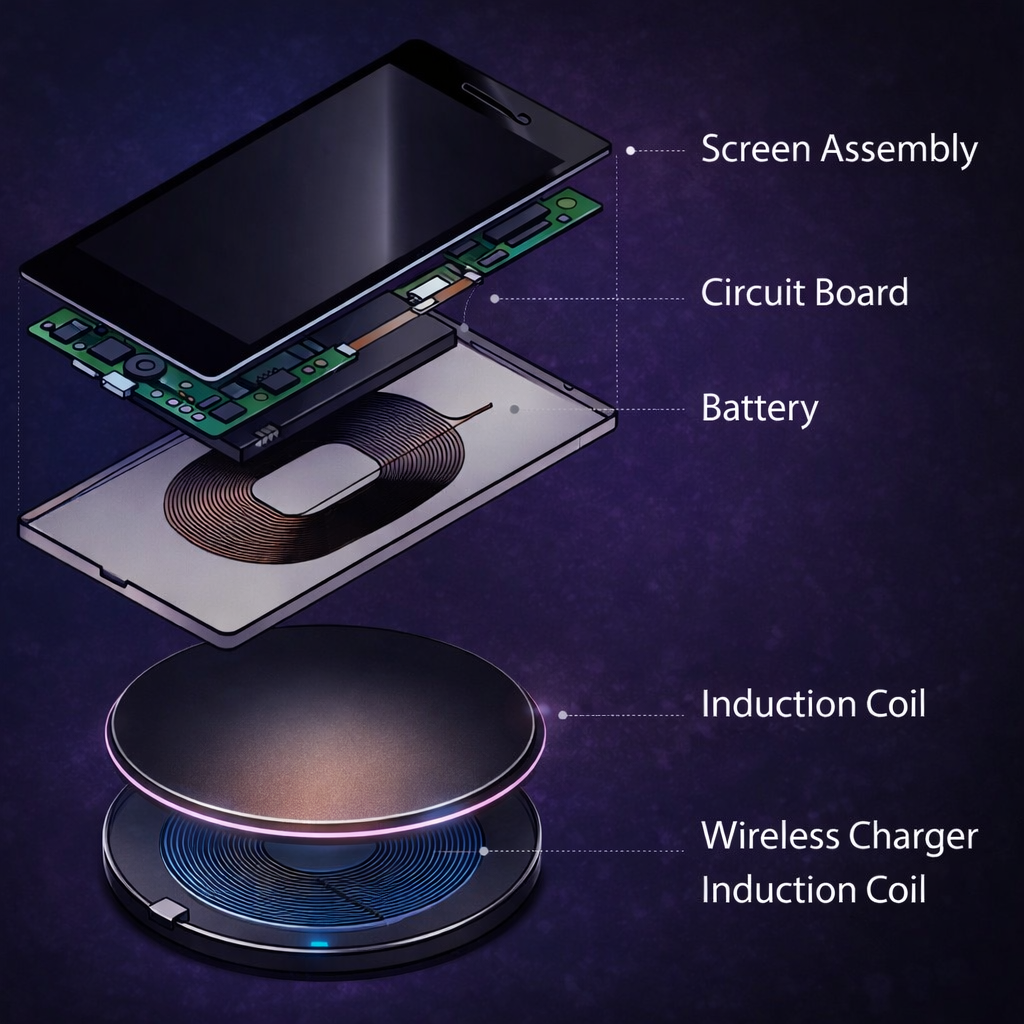
The most commonly used wireless charging standard is Qi technology. It is responsible for compatibility between different phone models and chargers. In practice, this means that a Qi-enabled smartphone can be charged both with a classic inductive charger and with a magnetic wireless charger.
Wireless charging is convenient and safe for the battery, as the system automatically controls charging power, temperature, and protection against overheating and overvoltage. This has a positive impact on battery lifespan and charging stability.
How to check if a phone supports inductive charging 5 simple ways
The simplest way is to check the phone’s technical specifications on the manufacturer’s website. Information about inductive or wireless charging is always included in the official specifications.
The second method is to check the system settings. On many smartphones, notifications related to wireless charging or fast inductive charging appear after placing the phone on a charger.
The third option is a practical test. Simply place the phone on an inductive charger or a charging station. If the charging process starts automatically, it means the device supports the Qi standard.
The fourth method involves checking the phone’s construction. Models with metal backs rarely support inductive charging. Glass or ceramic housings usually indicate compatibility with wireless charging.
The fifth way is to verify whether the phone works with charging through a case. Modern accessories, including MagSafe-compatible cases, do not block inductive charging and allow stable magnetic alignment.
Apple phones and inductive charging Qi and MagSafe in practice
Apple smartphones have supported inductive charging for years. The first model to feature it was the iPhone 8. From that point on, the history of MagSafe chargers began, and wireless charging for iPhones became a standard in subsequent generations.
A major breakthrough was the introduction of MagSafe technology. This solution uses built-in magnets that automatically position the charger relative to the phone. As a result, Apple’s MagSafe charging is more stable and allows for optimal charging power.
MagSafe operates based on the Qi standard but offers additional benefits such as magnetic alignment, fast wireless charging, and access to the entire MagSafe accessory ecosystem. This includes MagSafe charging stations, MagSafe desktop chargers, car mounts, and the MagSafe Power Bank.
Inductive and MagSafe chargers what to consider when choosing
When choosing an inductive charger or a MagSafe charger, it is worth paying attention to the charging power, compatibility with the Qi standard, and the intended use.
For everyday iPhone charging, 15 W inductive chargers compatible with Apple MagSafe work particularly well. Thanks to MagSafe magnets, they automatically align the phone, ensuring stable and safe charging. Examples include the inductive charger Hoco 15W compatible with MagSafe CW57 and the inductive charger XQISIT 15W compatible with MagSafe with a USB-C cable – desktop models designed for wireless phone charging.
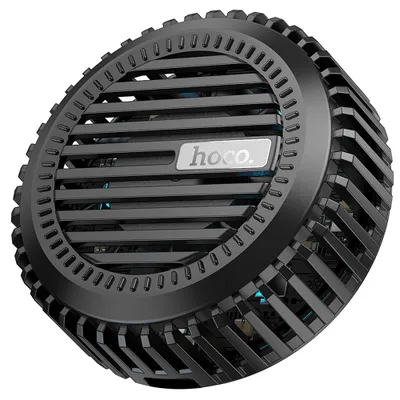
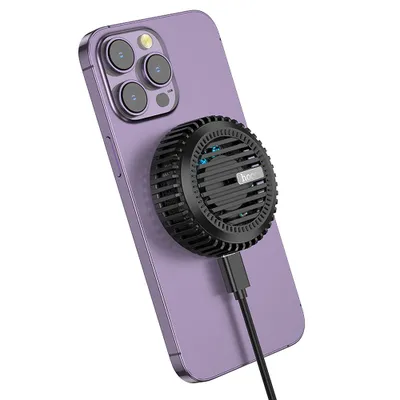
Hoco 15W inductive charger compatible with MagSafe CW57
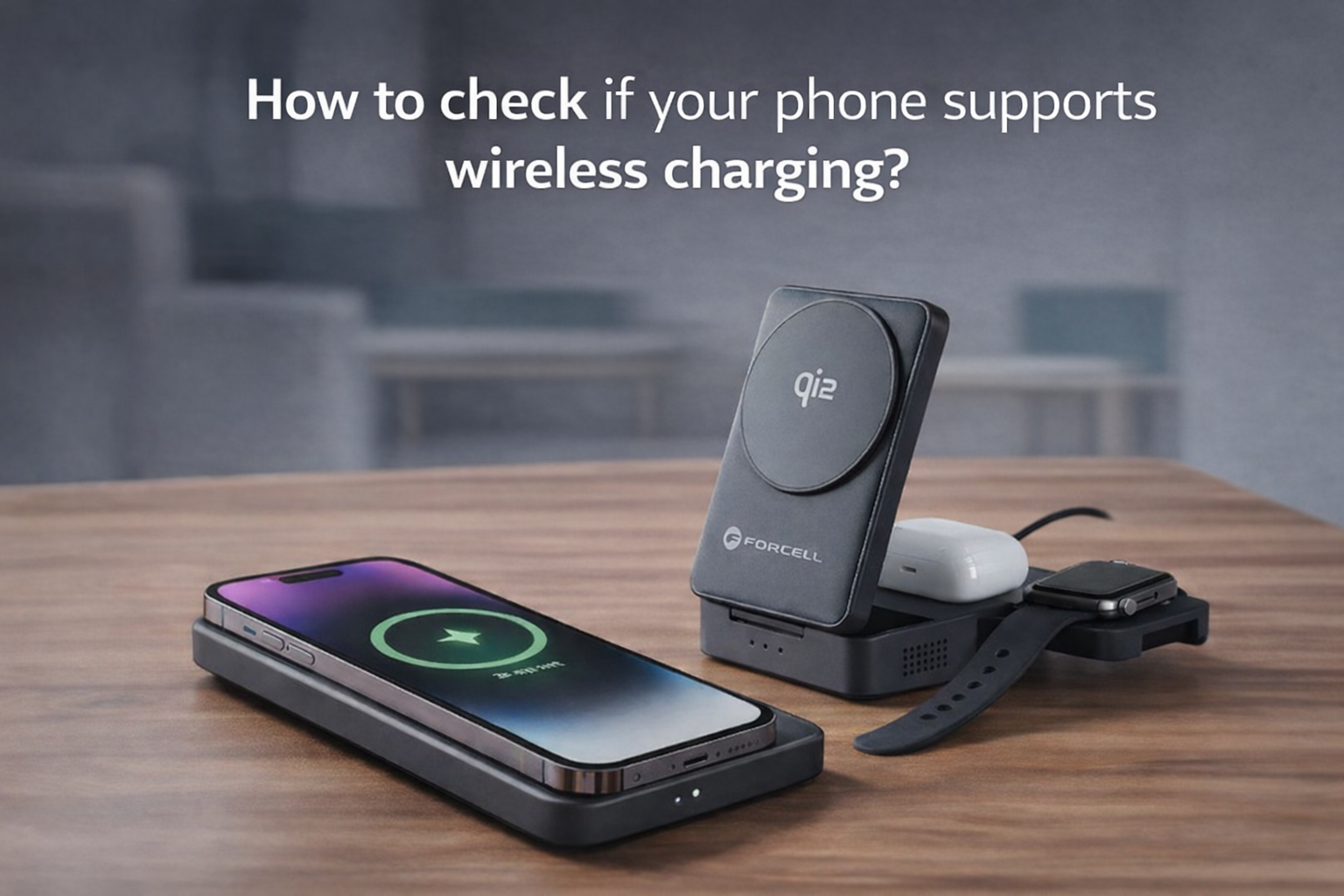
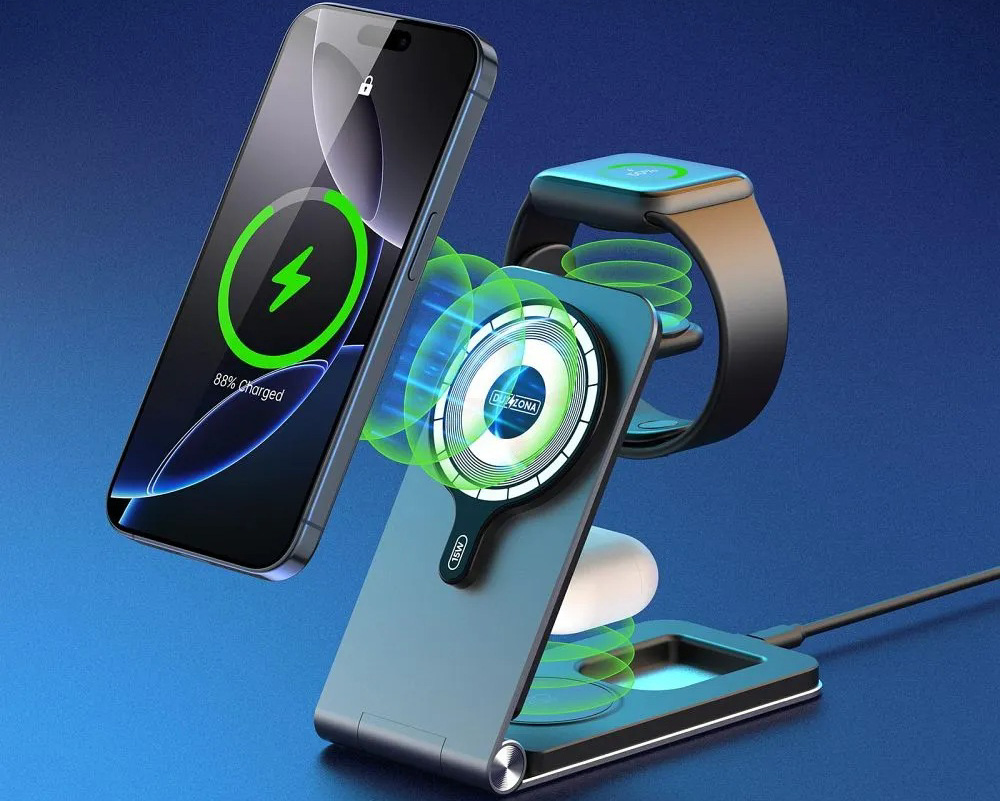
Inductive 3-in-1 chargers are becoming increasingly popular, as they allow wireless charging of multiple devices at the same time. Models such as Forcell F-Energy 3w1 Simply Charge and Hoco 3w1 15W compatible with Apple Watch make it possible to charge an iPhone, AirPods, and a watch in one place, without the need for additional cables.
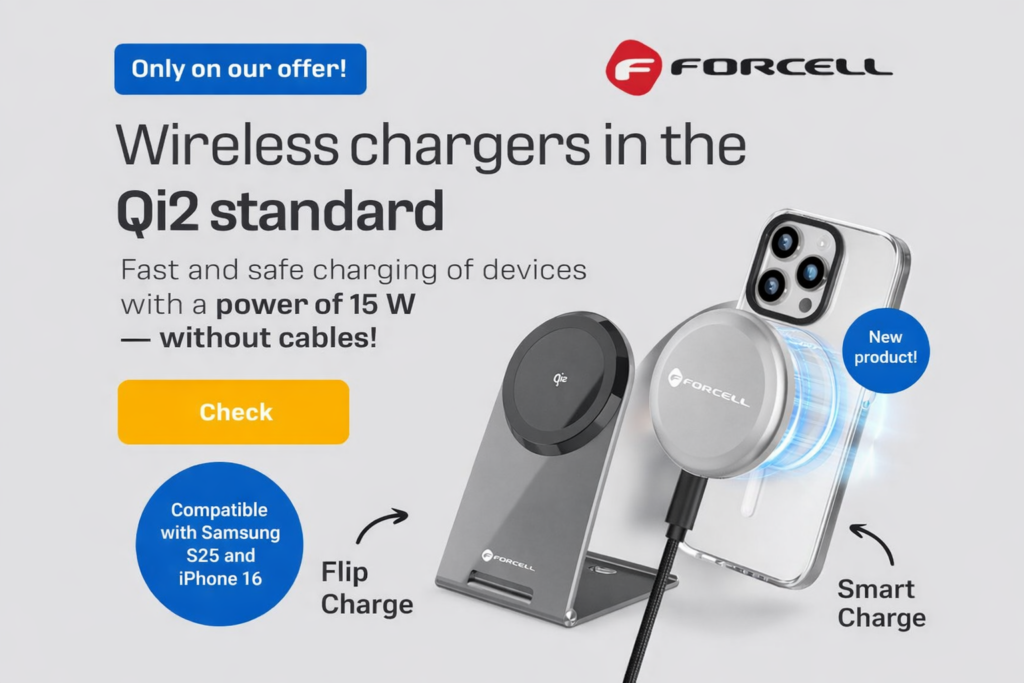
For mobile users, a great choice are foldable MagSafe inductive chargers, such as the VEGER foldable 15W inductive charger Q7 or the Hoco 3w1 foldable charger compatible with MagSafe CQ22. These models combine a compact form factor with fast wireless charging.
In the segment of branded solutions, it is worth paying attention to the original Samsung Duo EP-P5400 inductive charger, which supports 15 W inductive charging, allows charging two devices at the same time, and uses overheating protection and foreign object detection, increasing the safety of charging Qi-compatible devices.
Veger wireless charging power banks
Is inductive charging safe for the battery?
One of the most common questions is whether wireless charging is safe for a phone’s battery. Modern inductive and MagSafe chargers are designed with battery protection in mind. The systems control temperature, charging power, and the duration of the process.
Protection against overheating and overvoltage means that inductive charging does not cause faster battery wear than wired charging. Moreover, MagSafe chargers enable stable and predictable charging, which is especially important for everyday use.
In practice, this means that wireless charging can be safely used on a daily basis, provided that certified and proven accessories are used.
How to check if your phone supports inductive charging? Frequently asked questions
Does every smartphone support inductive charging?
No. Inductive charging is mainly available in newer smartphone models. To be sure, you should check the phone’s specifications and look for information about inductive charging, wireless charging, or the Qi standard. In the case of iPhones, inductive charging has been available since the iPhone 8, and newer generations also support Apple MagSafe.
What is the fastest way to check if a phone has inductive charging?
The simplest way is to:
- check the manufacturer’s specifications,
- place the phone on an inductive charger and see whether the charging process starts automatically.
If the phone starts charging without a cable connected, it means it supports inductive charging.
Is inductive charging the same as wireless charging?
In practice, yes. Inductive charging is the technology itself, while wireless charging is its user-friendly name. In smartphones, both terms refer to the same process of transferring energy without a cable, most commonly using the Qi standard.
What is the difference between Qi charging and MagSafe?
Qi charging is a universal wireless charging standard used in many smartphones. MagSafe is Apple’s solution, which still uses Qi but additionally relies on MagSafe magnets to precisely align the phone on the charger. As a result, charging is more stable and predictable.
Is inductive charging safe for a phone’s battery?
Yes. Modern inductive chargers and MagSafe chargers are equipped with protection against overvoltage, overheating, and unstable charging. When using compatible and proven accessories, safe battery charging does not negatively affect battery lifespan.
Can a case block inductive charging?
Yes, a case can affect inductive charging. Thick or metal cases may weaken energy transfer. For iPhones, Apple MagSafe cases work best, as they are designed to cooperate with MagSafe magnets. Such cases not only do not block inductive charging but also ensure stable phone positioning on a MagSafe charger.
What inductive charger power should you choose?
The most common option is 15 W inductive chargers, which enable fast wireless charging, provided that the phone supports this power level. It is worth remembering that actual charging speed depends on the phone’s capabilities and the technology used (Qi or MagSafe).
Can more than one device be charged at the same time?
Yes. 2-in-1 and 3-in-1 charging stations are available, allowing you to charge a smartphone, wireless earbuds, and a watch at the same time. This is a practical solution for users who rely on multiple devices every day.
Should a seller always recommend MagSafe for an iPhone?
Not always. A MagSafe wireless charger is ideal for iPhone users who value convenience and stable phone positioning. In other cases, a classic Qi inductive charger tailored to the customer’s needs and budget may be sufficient.
Which USB-C power adapter works best with an inductive charger?
A USB-C power adapter with appropriate output power, matched to the capabilities of the inductive charger and the phone, works best. Such an adapter ensures stable power delivery and allows you to fully benefit from fast and safe wireless charging.
Does Power Delivery (PD) matter for inductive charging?
Yes. Power Delivery (PD) is a standard that allows a USB-C power adapter to deliver the appropriate power to an inductive or MagSafe charger. This makes wireless charging faster, more stable, and safer for the phone’s battery.
At the Partner Tele.com wholesale store, a wide selection is available:
- inductive chargers,
- MagSafe chargers,
- charging stations tailored to various smartphone models and manufacturer ecosystems.
The offer includes both simple inductive chargers for everyday use as well as advanced 3-in-1 solutions and branded models compatible with Apple MagSafe and the Qi standard. This allows sellers to easily select accessories that meet the needs of end customers, while users can enjoy convenient and safe wireless charging of their devices.